


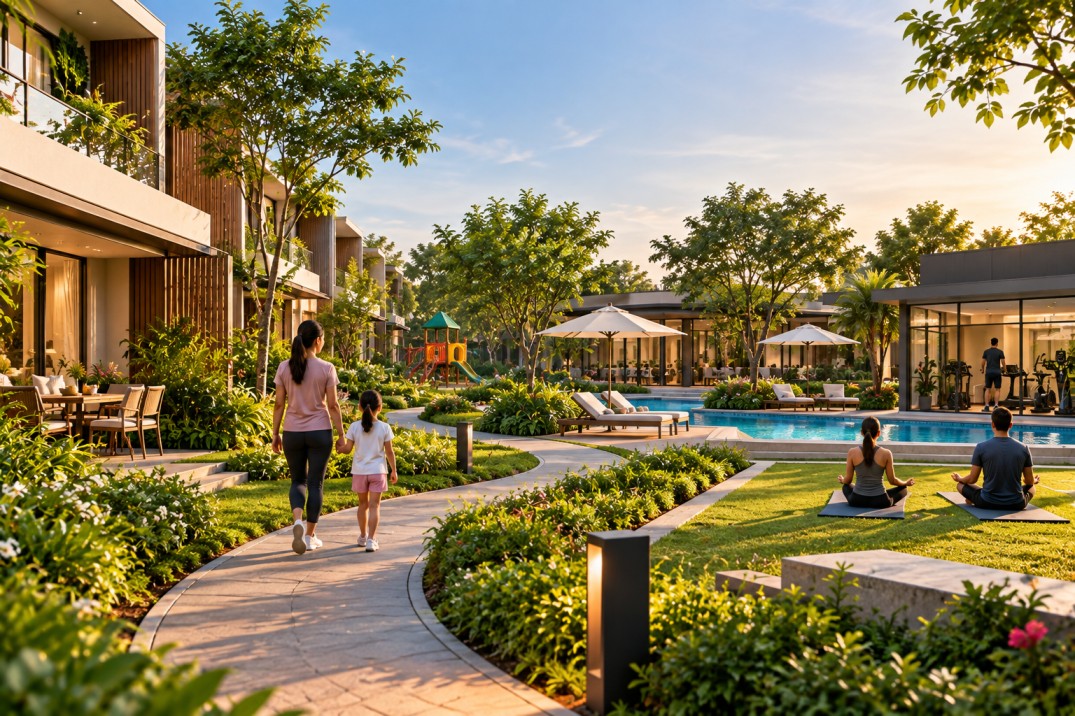
Choosing a villa is about more than the size of the home, number of bedrooms, or location. For many modern homebuyers, the way a property supports everyday wellbeing is becoming an important part of the decision-making process. This has increased interest in wellness-focused amenities, which can include landscaped gardens, walking areas, fitness spaces, recreational facilities, natural lighting, quiet zones, and thoughtfully planned community spaces.
However, not every wellness amenity offers the same value for every homeowner. Some features may support daily routines, while others may require additional maintenance or may be used only occasionally. Understanding these differences can help buyers evaluate a villa based on their actual lifestyle rather than simply choosing a property with the longest amenities list.
What Are Wellness-Focused Amenities in a Villa Community?
Wellness-focused amenities are features designed to support physical activity, relaxation, social interaction, access to nature, and a comfortable living environment.
In a villa community, these may include:
- Landscaped gardens and green spaces
- Walking and jogging areas
- Fitness centres or gyms
- Yoga and meditation spaces
- Swimming pools
- Outdoor seating areas
- Children’s recreational zones
- Sports facilities
- Natural landscaping
- Open-air gathering spaces
- Quiet areas for relaxation
- Clubhouses and community spaces
Wellness does not necessarily mean having a dedicated gym or spa. The overall planning of the community can also influence how easily residents can incorporate movement, outdoor time, relaxation, and social interaction into their daily routines.
Why Are Wellness Amenities Becoming Important for Homebuyers?
A home is where people spend a significant portion of their daily lives. As a result, the surrounding environment can influence how residents use their time outside work and other responsibilities.
A thoughtfully planned villa community can provide opportunities to:
- Spend more time outdoors
- Exercise without travelling far from home
- Relax in landscaped surroundings
- Socialise with neighbours
- Give children safe areas for recreation
- Create separation between work and leisure
- Incorporate physical activity into everyday routines
The value of these features ultimately depends on whether residents actually use them.
Start With Your Personal Wellness Priorities
Before comparing villa communities, identify what wellness means for your household.
For one family, a fitness centre may be important. Another household may place greater value on gardens, walking spaces, swimming facilities, or areas where children can play.
Consider questions such as:
- Do you exercise regularly?
- Do you prefer indoor or outdoor activities?
- Do you spend time gardening or relaxing outdoors?
- Are recreational facilities important for your children?
- Do you value quiet spaces for reading or meditation?
- Do you prefer community activities and social interaction?
- How much time are you likely to spend using shared amenities?
This approach helps prevent buyers from paying extra for facilities they are unlikely to use.
Evaluate Green Spaces and Landscaping
Access to greenery can be an important part of a wellness-oriented residential environment. Landscaped gardens, trees, lawns, and planted areas can make common spaces more inviting and provide residents with places to spend time outdoors.
When evaluating landscaping, look beyond the number of plants shown in marketing images.
Check:
- How much green space is actually available?
- Are there usable walking areas?
- Are gardens distributed throughout the community?
- Are outdoor spaces accessible from residential areas?
- What type of landscaping is planned?
- Who will maintain the gardens?
- Will the landscape remain practical throughout the year?
A large landscaped area may look attractive, but its everyday value depends on accessibility, usability, and maintenance.
Look at Fitness Facilities and Their Accessibility
A gym or fitness centre can be convenient for homeowners who exercise regularly. Having a facility within the community can eliminate the need to travel to an external gym.
However, the presence of a gym does not automatically make a community wellness-focused.
Consider:
- Equipment available
- Size of the fitness area
- Operating hours
- Ventilation
- Maintenance
- Accessibility
- Availability of outdoor fitness options
- Whether the facility meets your family’s actual needs
A smaller but well-maintained fitness space may be more useful than a larger facility that is rarely maintained or difficult to access.
Consider Walking and Outdoor Activity Areas
Walkable community spaces can support simple forms of everyday physical activity. A dedicated walking path can also provide an opportunity to spend time outdoors without leaving the residential community.
When assessing these spaces, consider the layout rather than simply looking for the words “walking track” in the amenities list.
Check whether the paths are:
- Continuous
- Well connected
- Comfortable to use
- Properly maintained
- Suitable for different age groups
- Integrated with landscaped areas
- Separate from vehicle movement where appropriate
A community that encourages residents to walk naturally through its layout may provide greater practical value than one with an isolated activity area.
Assess Recreational Facilities for Different Age Groups
Wellness is not limited to adults. Families may benefit from amenities that support different forms of recreation for children, teenagers, adults, and older family members.
A family-oriented villa community may include:
- Children’s play areas
- Swimming pools
- Sports facilities
- Open lawns
- Indoor recreational spaces
- Community gathering areas
- Walking areas
The important factor is whether the facilities match the needs of your household.
A community with many recreational amenities may involve higher maintenance costs. Buyers should therefore consider both the benefits and the long-term management of these spaces.
Look for Spaces That Support Relaxation
Wellness also involves rest and relaxation. A residential community can provide spaces where homeowners can take a break from work and everyday responsibilities.
These could include:
- Garden seating
- Quiet landscaped areas
- Outdoor lounges
- Meditation spaces
- Poolside areas
- Reading zones
- Community terraces
The location of these spaces matters. A relaxation area positioned beside a busy driveway may not provide the same experience as a quieter space surrounded by landscaping.
Consider Indoor-Outdoor Living
The relationship between the villa and its surrounding environment can influence how residents use their home.
Features such as:
- Private gardens
- Balconies
- Terraces
- Large windows
- Outdoor seating
- Landscaped views
can create opportunities to spend time outside without leaving the property.
For homeowners who value outdoor living, a villa with usable private and shared outdoor areas may offer a different lifestyle experience from a home that relies primarily on indoor spaces.
Examine the Quality of the Community Layout
The overall planning of a villa community can be just as important as individual amenities.
A wellness-focused layout may consider:
- Pedestrian movement
- Green spaces
- Vehicle circulation
- Open areas
- Residential privacy
- Recreation zones
- Community gathering spaces
- Access to amenities
For example, separating pedestrian and vehicle movement can make certain outdoor areas more comfortable for walking and recreation.
Buyers should therefore review the site plan instead of evaluating amenities individually.
9. Understand the Maintenance Requirements
Every amenity requires maintenance. Gardens need landscaping, swimming pools require cleaning, gyms need equipment maintenance, and recreational spaces need regular upkeep.
Before buying, ask:
- Who maintains the amenities?
- Is maintenance included in community charges?
- What are the expected maintenance fees?
- How frequently are facilities serviced?
- Who manages repairs?
- Are there restrictions on amenity usage?
A community with extensive facilities may provide more recreational opportunities but could also involve higher ongoing maintenance costs.
Compare Private and Shared Wellness Features
One important decision is whether you prefer private wellness features or shared community amenities.
Private Wellness Features
Examples include:
- Private gardens
- Home gyms
- Terraces
- Private outdoor seating
- Personal exercise spaces
Advantages:
- Greater privacy
- Flexible usage
- No dependence on community schedules
- Personalised setup
Tradeoffs:
- Higher personal maintenance
- Additional setup costs
- Limited space in some villas
Shared Wellness Amenities
Examples include:
- Community gyms
- Swimming pools
- Clubhouses
- Walking areas
- Sports facilities
- Landscaped gardens
Advantages:
- More variety
- Shared maintenance
- Opportunities for social interaction
- Access to larger facilities
Tradeoffs:
- Shared usage
- Operating schedules
- Potential crowding
- Community maintenance charges
Neither approach is universally better. The right choice depends on how the household expects to use the space.
Think About Privacy and Community Interaction
Wellness can involve both personal privacy and social connection.
Some homeowners may prefer quiet spaces where they can relax alone, while others may enjoy community events, shared recreation, and social spaces.
When visiting a villa community, observe whether the layout provides a reasonable balance between:
- Private residential spaces
- Shared amenities
- Outdoor recreation
- Community interaction
- Quiet areas
A well-planned community can provide opportunities for interaction without making every part of the property highly social.
Consider Accessibility for the Whole Family
If a villa is intended as a long-term home, consider how wellness amenities will work for different stages of life.
Families may need to think about:
- Older family members
- Young children
- Accessibility of walking paths
- Distance to amenities
- Stair-free access where appropriate
- Seating areas
- Safety around pools and recreational spaces
A feature that is convenient today may become less practical as household needs change.
Look Beyond the Amenities Brochure
Marketing materials often highlight the number of amenities available. Buyers should evaluate how those amenities function in practice.
During a property visit, check:
- Actual size of facilities
- Location within the community
- Quality of landscaping
- Accessibility
- Maintenance standards
- Noise levels
- Privacy
- Safety
- Expected usage
- Operating hours
If possible, visit the property more than once and ask the developer or community management team detailed questions about maintenance and usage.
Wellness Amenities vs Location
A villa may have an impressive range of wellness amenities, but location remains an important consideration.
Think about the time required to reach:
- Schools
- Workplaces
- Hospitals
- Shopping areas
- Public transport
- Airports
- Major roads
A wellness-focused home should ideally support your overall lifestyle rather than isolate you from the places you regularly need to access.
This is particularly relevant for homeowners who plan to live in the property for many years.
What Are the Tradeoffs of a Wellness-Focused Villa Community?
Wellness-oriented residential developments can provide several lifestyle benefits, but buyers should consider the associated tradeoffs.
| Factor | Potential Benefit | Possible Tradeoff |
| Fitness centre | Convenient exercise | Maintenance costs |
| Swimming pool | Recreation and relaxation | Regular upkeep |
| Landscaped gardens | Outdoor environment | Landscaping expenses |
| Walking areas | Encourages outdoor activity | Requires space and maintenance |
| Clubhouse | Social and recreational use | Community charges |
| Private garden | Privacy and outdoor living | Personal maintenance |
| Sports facilities | Recreation for families | May require larger community spaces |
| Quiet zones | Relaxation and privacy | May reduce active communal space |
The objective is not to select the community with the largest number of amenities. Instead, consider whether the available features provide meaningful value for your household.
How to Choose the Right Villa for Your Lifestyle
A practical approach is to create three categories before visiting properties:
Must-Have Features
These are amenities or features that directly support your lifestyle, such as a gym, private garden, walking area, or children’s play space.
Useful Features
These are facilities that you would appreciate but would not consider essential.
Low-Priority Features
These are amenities that may look attractive but are unlikely to influence how your household actually lives.
This simple comparison can help keep the purchase decision focused on everyday requirements rather than marketing claims.
Is a Wellness-Focused Villa Right for You?
A wellness-focused villa community can be suitable for homeowners who want their residential environment to support outdoor activity, recreation, relaxation, and social interaction.
However, the value of these amenities depends on several factors, including their quality, accessibility, maintenance, location, and actual relevance to your lifestyle.
The best approach is to evaluate the villa, community layout, amenities, maintenance requirements, connectivity, and long-term suitability together.
Final Thoughts
Choosing a villa with wellness-focused amenities involves more than counting the number of facilities available. Homebuyers should consider how the community is planned and whether its features can realistically become part of their everyday routine.
Green spaces, walking areas, fitness facilities, recreational zones, private outdoor areas, and quiet spaces can all contribute to a more comfortable residential environment. At the same time, buyers should account for maintenance costs, accessibility, privacy, community charges, and location.
Ultimately, a well-planned villa is one where wellness features complement the way you and your family actually want to live, rather than simply adding more amenities to a brochure.